
Agentic AI should start with bounded actions where permission, escalation, and measurement are clear.
The customer handoff is part of the product experience, not a fallback afterthought.
Trust grows when the system knows when to act, when to ask, and when to bring in a human.
Agents are not just smarter chatbots
Agentic AI is different from a chatbot that answers questions. An agent can reason through a task, call tools, update systems, schedule appointments, qualify leads, summarize conversations, or trigger workflows. That power is exactly why customer engagement teams need discipline before they automate.
The right question is not whether an AI agent can handle a conversation. The question is which parts of the customer journey should be automated, which parts require human judgment, and how the company will know when the agent is helping or hurting trust.
Start with low-regret actions
A good first agentic workflow has clear intent, low downside, and a measurable outcome. Examples include answering common product questions from approved knowledge, routing inquiries, collecting missing information, booking appointments, reminding prospects, summarizing calls, or preparing a human representative before handoff.
High-risk actions should come later. Pricing exceptions, medical guidance, financial recommendations, contract negotiation, and emotionally sensitive conversations need stronger controls. Autonomy should expand only after the company understands failure modes.
The handoff is the product
Many AI engagement systems fail at the moment of handoff. The customer repeats themselves, the human agent lacks context, the CRM is messy, and the promise of automation becomes frustration. A serious design treats handoff as a core product experience, not an edge case.
The handoff should include intent, transcript, sentiment, qualification status, next best action, and any commitments the AI made. If the human cannot pick up the conversation gracefully, the AI system is not production-ready.
Guardrails that matter
Guardrails should be specific. The agent needs approved knowledge, clear escalation triggers, permission boundaries, logging, identity checks, and response constraints. It should know when to say it cannot help. It should not invent policy, make medical claims, promise discounts, or pretend to be human if the brand does not want that.
The CTO owns the technical controls, but the CEO and CMO own the trust decision. How much automation fits the brand? Where do customers expect empathy? Which mistakes would damage reputation? These are executive questions.
What I would build first
For a service business, healthcare company, senior living operator, or B2B platform, I would start with an intent capture and qualification agent connected to CRM and calendar workflows. The agent would answer from approved content, qualify the need, offer scheduling, and pass the conversation to a human with context.
That may sound modest, but it addresses real leakage. Companies lose leads because they respond too slowly, ask repetitive questions, or fail to follow up. Agentic AI can close those gaps without pretending to replace every human conversation.
Measure trust, not just volume
A bad agent can increase conversation volume while reducing buyer confidence. That is why the scorecard needs more than deflection rate. Track appointment quality, escalation success, customer satisfaction, lead-to-opportunity conversion, correction rate, and the percentage of conversations where the AI stayed inside approved boundaries.
The future of customer engagement is not AI versus humans. It is AI handling the repeatable work so humans can show up better when judgment, empathy, persuasion, or accountability matters.
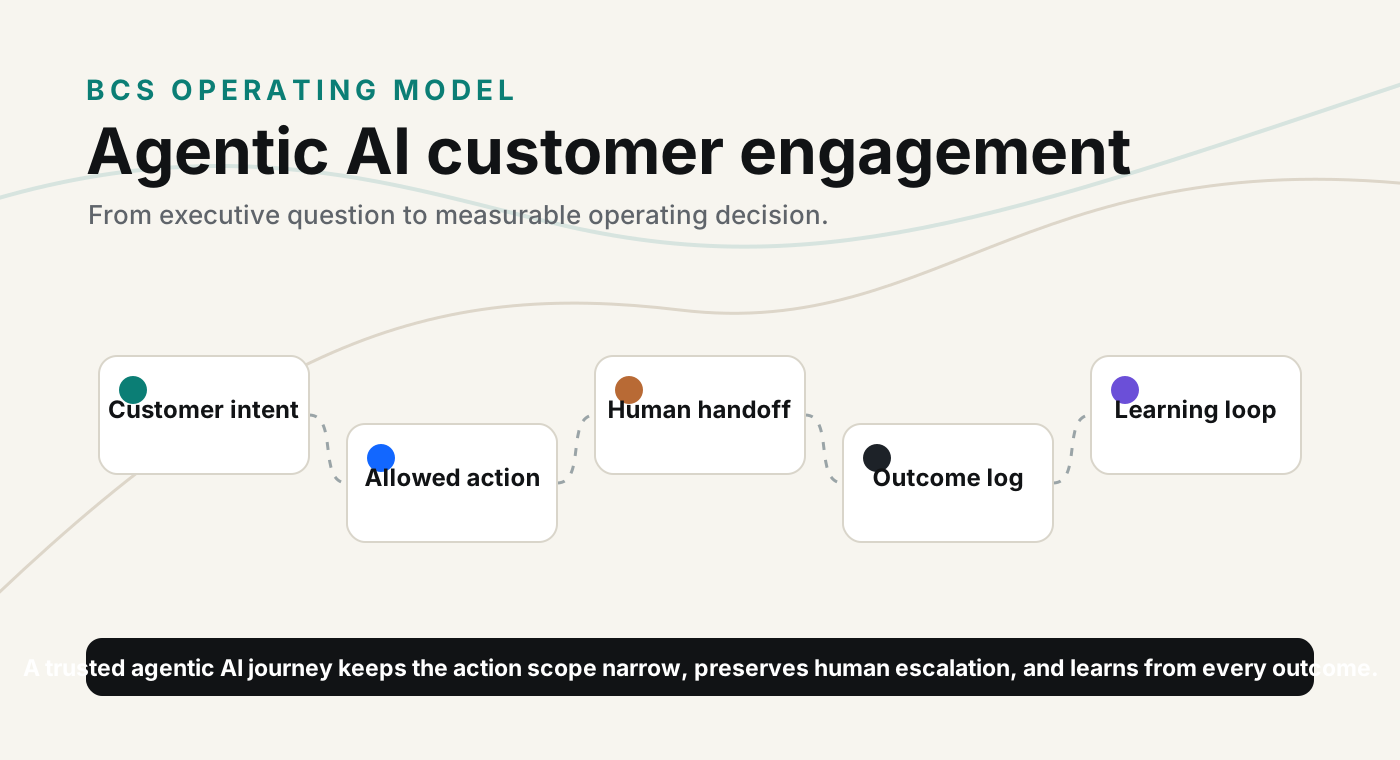
Operating flow
The practical sequence I would use to turn this idea into a working executive plan.
Metrics I would watch
Every serious engagement needs a scorecard. For this topic, I would start with these signals and refine them based on the business model, sales cycle, risk profile, and stage of the company.
- Speed to first response
- Qualified lead rate
- Human handoff success
- Appointment conversion
- Correction or escalation rate
- Customer satisfaction after AI interaction
How I would apply this
Turn the article into operating decisions.
Start with qualification, scheduling, retrieval, follow-up, and workflow routing before higher-risk automation.
Document what the agent can do, what it cannot do, and what triggers human review.
Measure resolution quality, trust, conversion, and escalation health rather than raw automation volume.
Questions worth answering before the next meeting
- What can the AI safely do without approval?
- Which moments require human judgment?
- What data proves the agent improved the journey?
Where BCS fits
BCS can help design conversational AI and agentic workflows that increase lead quality without damaging customer trust.
Discuss this engagement