

AI governance is now a board-level growth and risk issue, not only a technical backlog item.
The first job is inventory: where AI is used, what data it touches, and what consequences it can create.
Good governance gives teams permission to move faster because the rules are visible.
AI risk is now business risk
AI security is not a niche engineering issue anymore. A company using AI in customer support, internal knowledge, sales enablement, healthcare workflows, revenue cycle processes, or product features is making decisions about data exposure, model behavior, vendor dependence, and customer trust. Those decisions belong in executive conversation.
The board does not need to review every prompt. It does need to know where AI is being used, what data it touches, who owns the risk, and what controls exist if the system behaves unexpectedly.
Inventory before policy
Many companies try to write an AI policy before they understand their AI usage. That creates documents that sound responsible but do not match reality. The first move should be an inventory: approved tools, shadow tools, customer-facing use cases, internal workflows, data categories, vendors, and owners.
This inventory usually exposes surprises. Teams are using AI to summarize sensitive documents, draft customer responses, analyze call transcripts, or enrich sales data. Some of that may be fine. Some of it may be reckless. You cannot govern what you have not named.
Tier risk by consequence
Not every AI use case deserves the same level of control. A marketing brainstorming tool is different from a healthcare recommendation workflow. A summarizer for public documents is different from an agent connected to customer records. Governance should tier use cases by data sensitivity, customer impact, regulatory exposure, autonomy, and reversibility.
This tiering helps the company move faster where risk is low and slow down where mistakes matter. Good governance is not a brake on innovation. It is a steering system.
Controls executives should expect
The basic control set includes access management, data classification, vendor review, approved knowledge sources, prompt and output logging, human review for high-risk workflows, incident response, and periodic testing. For agentic systems, add tool permissions, transaction limits, rollback paths, and escalation rules.
The CTO can design these controls, but the CEO has to sponsor them. Without executive sponsorship, governance becomes optional advice. With sponsorship, it becomes part of how the company protects trust.
Marketing claims are part of governance
CMO involvement is often overlooked. AI claims can create risk if the company exaggerates autonomy, accuracy, compliance, or outcomes. Marketing should communicate capability with confidence but not fantasy. Buyers are becoming more sophisticated, and vague AI claims are losing credibility.
Responsible AI can become a market advantage when the company explains its guardrails clearly. Trust is not just a legal posture. It is a positioning asset.
A practical board cadence
A board-level AI governance update can be simple: active AI use cases, high-risk workflows, incidents or near misses, vendor exposure, policy exceptions, customer-facing claims, and upcoming decisions. The point is not to turn the board into a technical committee. The point is to keep AI adoption aligned with enterprise risk and growth strategy.
Companies that treat AI governance seriously will move faster over time because customers, partners, and regulators will trust them more. Companies that treat it casually may move quickly at first and then lose time cleaning up preventable mistakes.
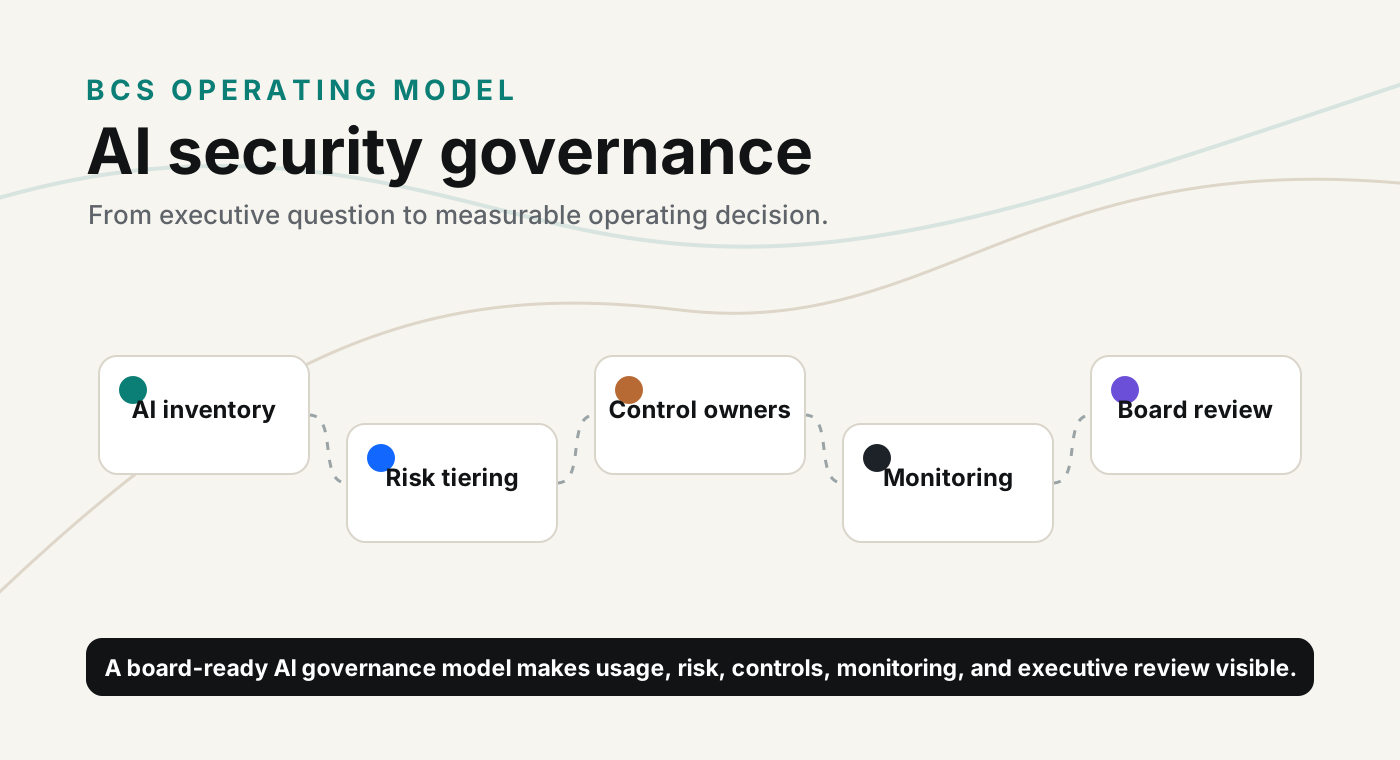
Operating flow
The practical sequence I would use to turn this idea into a working executive plan.
Metrics I would watch
Every serious engagement needs a scorecard. For this topic, I would start with these signals and refine them based on the business model, sales cycle, risk profile, and stage of the company.
- AI use cases inventoried
- High-risk workflows governed
- Vendor reviews completed
- Policy exceptions reduced
- AI incidents or near misses
- Customer trust assets published
How I would apply this
Turn the article into operating decisions.
Create an AI usage inventory across product, sales, marketing, support, and internal operations.
Tier use cases by data sensitivity, customer impact, legal exposure, and operational consequence.
Assign control owners and build a board cadence around exceptions, adoption, and risk reduction.
Questions worth answering before the next meeting
- Which AI use cases carry business consequence?
- Who owns customer-facing claims and controls?
- What risk data should reach the board every month?
Where BCS fits
BCS can help leadership teams build AI security governance, compliance readiness, and board-level risk visibility.
Discuss this engagement