
The old form-fill funnel misses intent, urgency, objections, and buying context.
Conversational AI should qualify, route, schedule, and nurture while preserving human handoff.
The sales funnel improves when conversation data feeds content, CRM stages, and follow-up logic.
The form-fill funnel is leaking
Many websites still treat conversion as a static form. The buyer reads a page, clicks contact, submits information, and waits. That workflow is misaligned with modern expectations. Buyers want answers, context, scheduling, and follow-up while their intent is active.
Conversational AI changes the front door. A visitor can ask a question, identify their need, compare options, schedule time, receive a resource, and enter a nurture path without waiting for a human to notice the form submission.
Conversation is a qualification layer
A good conversational funnel does more than greet the visitor. It qualifies intent. Are they looking for fractional CTO help, AI strategy, cybersecurity, cloud modernization, or a partnership conversation? Are they a founder, board member, operator, or vendor? What timeline and problem are they bringing?
This qualification makes the human follow-up better. Instead of starting from a blank form, the advisor sees the buyer's language, urgency, constraints, and likely service fit.
AI voice and chat should share context
The future funnel will blend chat, AI voice, SMS, email, and human handoff. The problem is that many companies implement these channels separately. Chat does not know what voice captured. Sales does not know what the nurture sequence promised. Marketing cannot see which questions keep appearing.
A serious conversational AI strategy connects the channels through CRM and analytics. The conversation becomes a data asset, not a disconnected widget.
Design for trust
The assistant should be clear, helpful, and bounded. It should not pretend to be a human if that is not the intent. It should not oversell. It should not make promises outside approved language. It should know when to route the conversation to a person.
Trust is especially important in healthcare, senior living, financial services, and executive consulting. The tone has to be professional and useful, not gimmicky.
What I would build first
For BCS, I would design a conversation path around buyer intent: fractional CEO, fractional CTO, fractional CMO, AI roadmap, cloud modernization, cybersecurity, or investment conversation. Each path would ask two or three useful questions, offer relevant content, and create a clean scheduling or email handoff.
The same model applies to senior living, dental AI, healthcare revenue cycle, and B2B services. The goal is to reduce friction between interest and next step.
Use conversation data to improve marketing
Conversational AI produces language that SEO tools often miss. Buyers reveal how they describe the problem, what objections they have, what roles are involved, and what urgency sounds like. That data should feed content strategy, landing pages, sales scripts, and product messaging.
The funnel becomes smarter over time when marketing and sales review the conversation patterns together. That is where conversational AI becomes a growth system instead of a novelty.
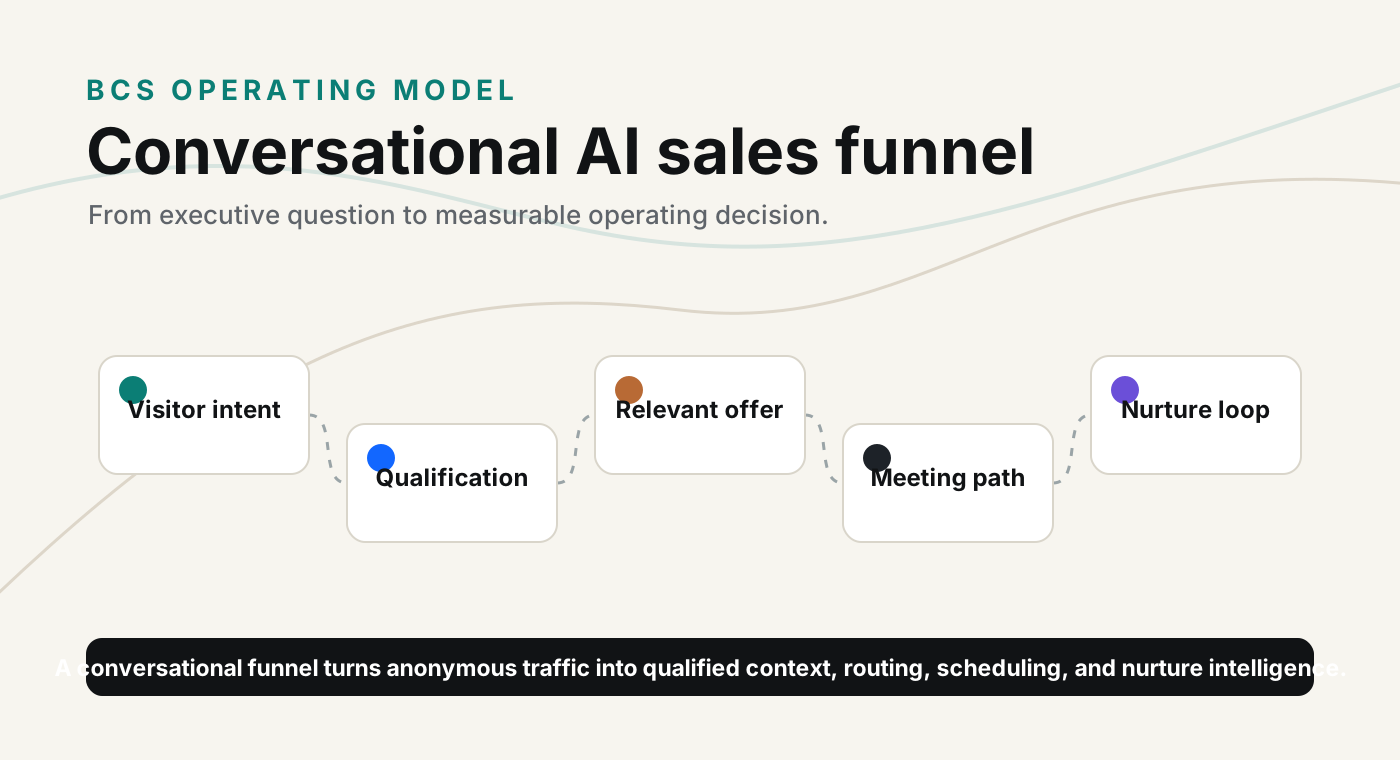
Operating flow
The practical sequence I would use to turn this idea into a working executive plan.
Metrics I would watch
Every serious engagement needs a scorecard. For this topic, I would start with these signals and refine them based on the business model, sales cycle, risk profile, and stage of the company.
- Visitor-to-lead conversion
- Speed to lead
- Meeting booking rate
- Lead quality score
- Conversation-to-content insights
- Human handoff completion
How I would apply this
Turn the article into operating decisions.
Segment conversations by fractional leadership, AI roadmap, cloud modernization, cybersecurity, startup cohort, or investment intent.
Ask only the questions needed to route the buyer and personalize the next step.
Feed objections and repeated questions back into SEO content and sales enablement.
Questions worth answering before the next meeting
- What should the site learn before a meeting?
- When should AI stop and a human take over?
- Which conversation signals improve lead scoring?
Where BCS fits
BCS can help design conversational lead capture that improves qualification, scheduling, CRM context, and buyer trust.
Discuss this engagement