

Organic demand now depends on executive authority, search intent, AI answer visibility, and conversion architecture.
The best content assets answer real buyer questions with a point of view competitors cannot copy.
A fractional CMO connects positioning, SEO, thought leadership, CRM capture, and sales feedback.
SEO is no longer a publishing quota
The old content playbook was simple: find keywords, publish articles, add internal links, wait for rankings. That playbook is not enough anymore. Buyers are using AI answers, search summaries, social proof, referrals, and direct research before they ever fill out a form. Thin content gets ignored because it does not help the buyer think.
A fractional CMO has to build an organic system around expertise. The content must answer real buyer questions, demonstrate judgment, and create enough trust that a founder, board member, or operator is willing to start a conversation. This is especially true for fractional CEO, CTO, and CMO work because buyers are not shopping for a commodity. They are evaluating credibility.
Turn executive experience into searchable assets
The best SEO asset for a consulting brand is not a generic trend article. It is a strong point of view rooted in lived operating experience. If I am writing about fractional CTO work, I should explain how I would sequence an AI roadmap. If I am writing about fractional CEO work, I should explain how I would create traction cadence. If I am writing about fractional CMO work, I should show how organic demand becomes qualified pipeline.
The content should sound like it came from someone who has been in the room. That means naming tradeoffs, mistakes, decision criteria, and uncomfortable truths. Search engines can index keywords, but buyers respond to specificity.
Build topic clusters around buying intent
For BCS, the topic clusters should be intentionally commercial without being desperate. Fractional CEO, fractional CTO, fractional CMO, AI strategy, conversational AI, cloud modernization, cybersecurity governance, healthcare AI, startup traction, and operator-investor due diligence all connect directly to the work. These are not random traffic topics. They are entry points for qualified conversations.
Each article should link to related articles and to a consultation path. A person reading about AI roadmap work may also need cloud modernization, security governance, or executive leadership. The internal linking should reflect how buyers actually think, not how a site map happens to be organized.
AI search changes the writing standard
AI search engines and answer engines reward content that is clear, structured, and attributable. That does not mean writing robotic content. It means making the expertise easy to parse: definitions, frameworks, examples, decision trees, metrics, and concise summaries. A good article should serve both a human executive and a machine trying to understand the authority of the page.
This is where many companies will embarrass themselves. They will publish generic AI-written articles that sound plausible but say nothing. A serious executive brand needs original thinking, practical examples, and a voice that carries responsibility. If the article could appear on any competitor's site with the logo swapped out, it should not be published.
Conversion paths matter as much as rankings
Organic traffic is only useful if the page gives the right reader a next step. A consulting site should not trap serious buyers in vague CTAs. The page should make it clear what kind of engagement is available: fractional CEO, fractional CTO, fractional CMO, AI strategy, cloud modernization, cybersecurity, or go-to-market support.
The next step can be soft. It does not need to scream. But it should be present: schedule a consultation, ask for an operating review, discuss an AI roadmap, or explore a fractional executive engagement. The page should help the buyer recognize themselves and then act without friction.
The CMO operating rhythm
A fractional CMO engagement should create a publishing calendar, keyword map, article briefs, conversion architecture, analytics dashboard, and sales feedback loop. But more importantly, it should create editorial discipline. Every piece of content must have a buyer, a search intent, a business purpose, and a point of view.
The goal is not more content. The goal is compounding authority. When done well, organic content reduces sales friction because prospects arrive already understanding how you think. That is the kind of lead generation a senior consulting brand should want.
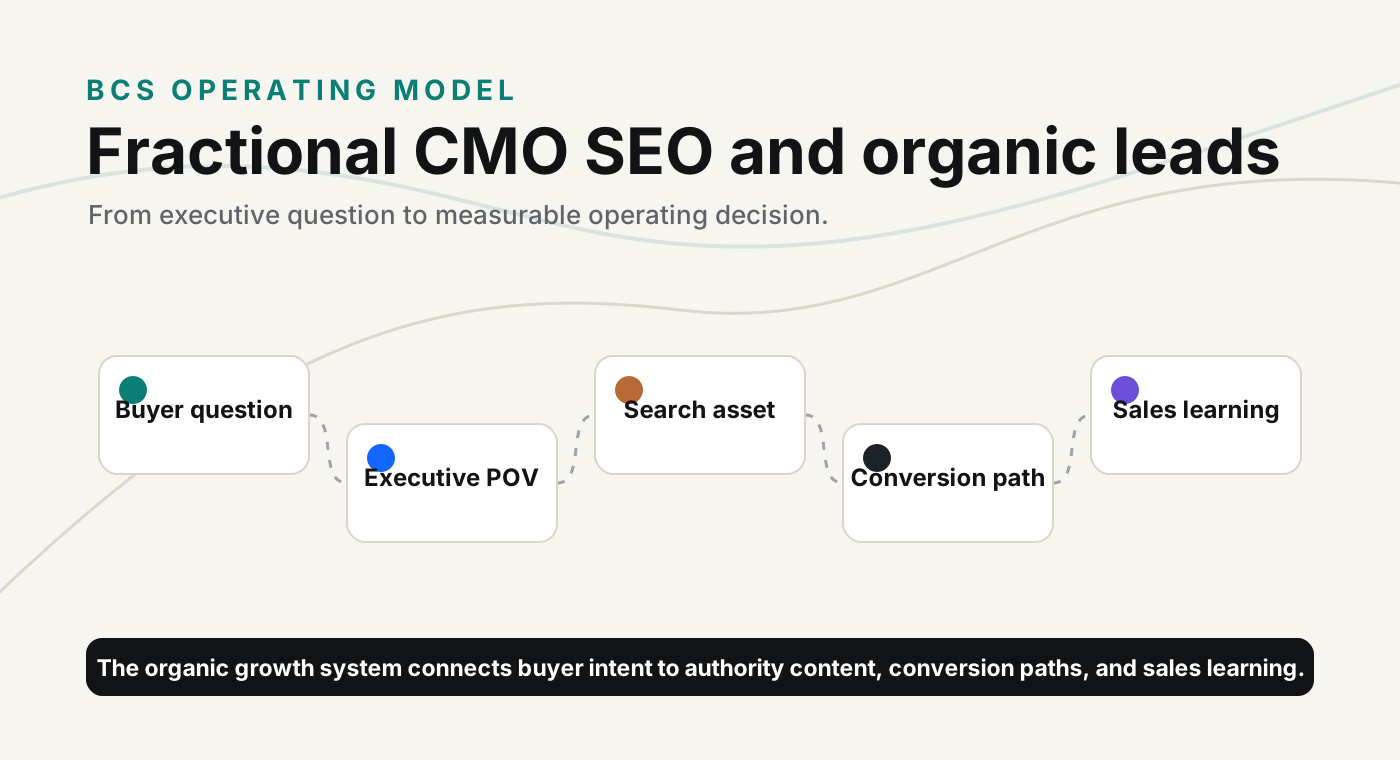
Operating flow
The practical sequence I would use to turn this idea into a working executive plan.
Metrics I would watch
Every serious engagement needs a scorecard. For this topic, I would start with these signals and refine them based on the business model, sales cycle, risk profile, and stage of the company.
- Non-branded impressions for fractional role terms
- Qualified organic consultations
- Article-to-contact conversion rate
- AI answer visibility
- Internal link depth
- Search queries that match service intent
How I would apply this
Turn the article into operating decisions.
Build service pages around high-intent fractional CTO, fractional CEO, fractional CMO, AI consulting, and SaaS founder searches.
Write articles that answer buying questions, objections, and decision criteria.
Use CRM and sales feedback to decide which topics deserve expansion.
Questions worth answering before the next meeting
- Which buyer question is closest to revenue?
- What proof makes the article credible?
- Where does the reader convert after trust is created?
Where BCS fits
BCS can help as a fractional CMO to build organic demand, executive content, SEO structure, and lead capture that supports qualified conversations.
Discuss this engagement