

A fractional executive is right when the company needs senior judgment before it is ready for a permanent hire.
The mandate should define decisions, cadence, outcomes, and knowledge transfer from day one.
The role works best when it closes a specific leadership gap across CEO, CTO, or CMO responsibilities.
The full-time hire is not always the first move
Companies often wait too long to bring in senior leadership because a full-time executive feels expensive, slow, or politically heavy. By the time they start the search, the company may already be suffering from unclear strategy, technical drift, weak demand generation, or founder overload.
Fractional leadership can be the bridge. It gives the company senior judgment before it commits to a permanent seat. The point is not to avoid hiring forever. The point is to solve the immediate leadership gap while learning what the permanent role should actually become.
When a fractional CEO makes sense
A fractional CEO is useful when the company needs operating cadence, strategic clarity, investor narrative, partner momentum, or cross-functional accountability. This can happen when a founder is stretched, a board needs more disciplined reporting, or a company is between growth stages.
The mandate should be specific. Do not hire a fractional CEO to vaguely help with strategy. Hire one to create traction rhythm, prepare for fundraising, stabilize execution, clarify positioning, or lead a defined transformation window.
When a fractional CTO makes sense
A fractional CTO is useful when technology decisions are becoming business risks. The company may be adopting AI, modernizing cloud systems, reviewing architecture, selecting vendors, improving security, or trying to ship faster without creating technical debt that will punish the next stage.
This role is especially valuable when the team has engineers but lacks senior technical leadership. Developers can build, but the company still needs architecture judgment, roadmap sequencing, delivery governance, and executive translation.
When a fractional CMO makes sense
A fractional CMO is useful when the company needs market clarity and demand generation before it is ready for a large marketing organization. The work may include positioning, organic SEO, content strategy, conversion paths, customer research, sales enablement, and marketing operations.
The danger is hiring marketing execution before the message is clear. A fractional CMO can define the narrative, buyer, channels, and measurement system so execution has a fighting chance.
How to define the mandate
A good fractional mandate includes the business problem, desired outcomes, decision rights, weekly cadence, stakeholders, timeline, and success metrics. Without that, the engagement becomes advisory fog. With it, the fractional leader can move quickly and be held accountable.
The mandate should also include capability transfer. The company should end the engagement with better systems, clearer decisions, stronger assets, and a sharper understanding of the permanent role it may need next.
Fractional should feel senior, not part-time
Fractional does not mean casual. It means focused. The leader may not be full-time, but the judgment should be executive-grade. The company should feel more decisive, more aligned, and more capable because the right pressure is being applied in the right places.
If the business is caught between vision and execution, a fractional CEO, CTO, or CMO can be the most practical way to create movement without overcommitting too early.
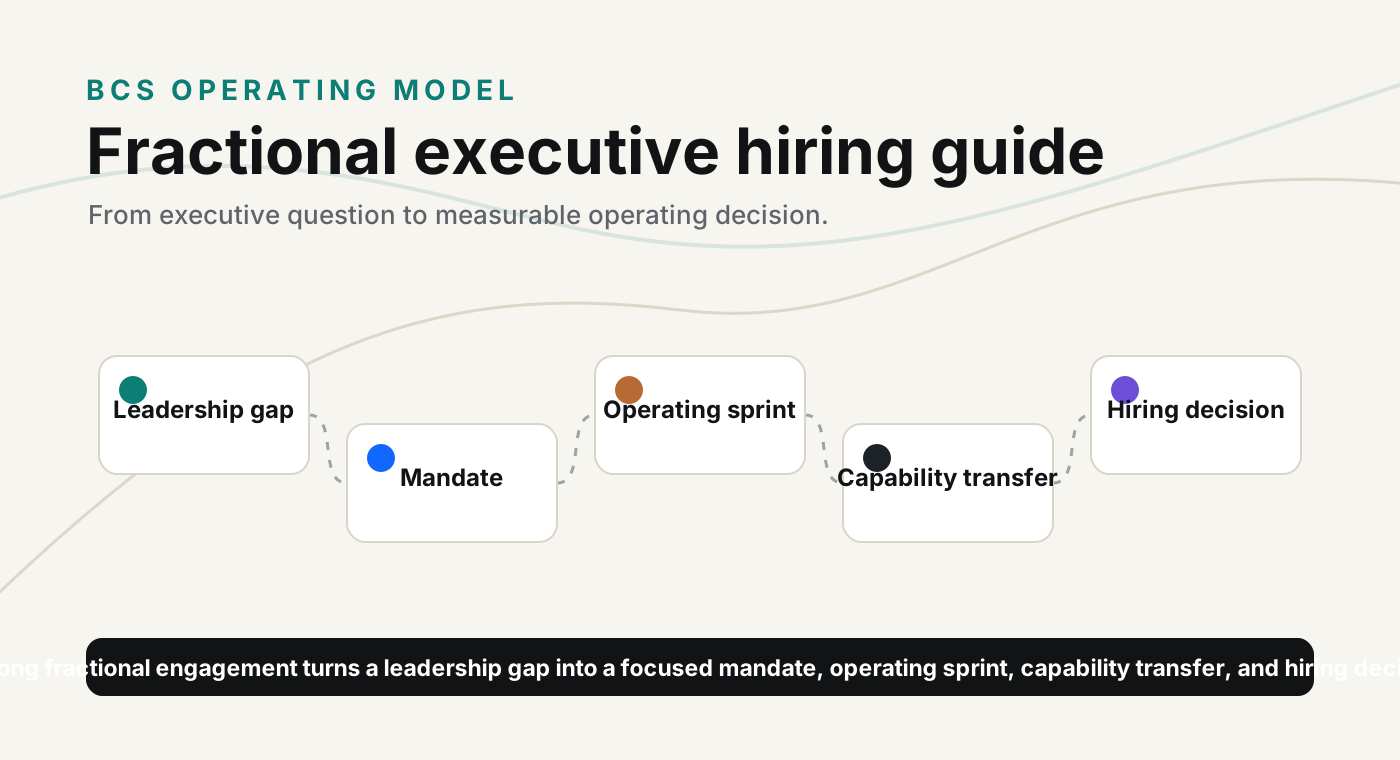
Operating flow
The practical sequence I would use to turn this idea into a working executive plan.
Metrics I would watch
Every serious engagement needs a scorecard. For this topic, I would start with these signals and refine them based on the business model, sales cycle, risk profile, and stage of the company.
- Mandate clarity
- Decision cycle time
- Roadmap risk reduced
- Qualified pipeline created
- Team capability transferred
- Permanent role definition
How I would apply this
Turn the article into operating decisions.
Define whether the real gap is strategy, technology, market demand, operating cadence, or executive bandwidth.
Set a 30-60-90 day mandate with measurable outcomes and decision rights.
Use the engagement to clarify what a future full-time executive must own.
Questions worth answering before the next meeting
- What senior decision is missing today?
- What outcome must improve in 90 days?
- Does the company need a permanent hire or a focused executive sprint?
Where BCS fits
BCS can help founders and boards decide whether fractional CEO, CTO, or CMO leadership is the right next move.
Discuss this engagement